

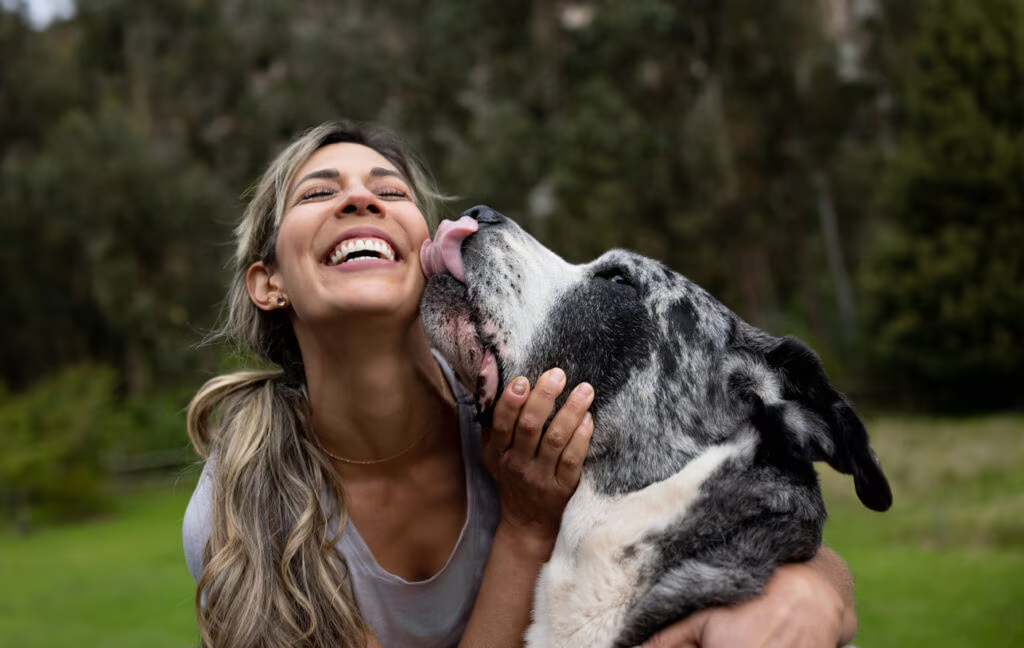
There’s nothing that fills your heart—or your home—quite like a big dog. But while there are a lot of benefits to a large dog joining your family, there are some considerations pet parents need to keep in mind, too.
Caring for a Big Dog
Pet parents considering big breeds of dogs should know what they’re getting into before bringing one home.
Size
Dogs that are big start out as (relatively) little puppies, but that doesn’t last long! Giant breeds typically take 18–24 months to reach their full size, but most of that growth occurs before they are a year old. Be sure you have enough room for their big “teenage” bodies. Families with children should also be mindful—while many large dog breeds are gentle giants, they can accidentally knock over young kids.
Budget
Big dogs need more food than their smaller cousins. Also, veterinarians prescribe medicine based on a pet’s weight, so bigger dogs need larger doses. That all means bigger dogs will generally cost more than small dog breeds, because they need more of just about everything.
Health
Big dog breeds are especially prone to certain health conditions. Common concerns that pet parents should be aware of include bloat and gastric dilatation-volvulus (GDV), hip dysplasia, wobbler syndrome, and hypothyroidism. In general, big dogs also tend to have shorter lifespans than smaller breeds.
Training
All dogs need to be socialized and trained starting in puppyhood, but it is especially important for big dogs. Considering that some breeds can reach weights of 230 pounds or more in adulthood, early training allows pet parents to ensure their dog learns good manners and polite interactions while they’re a more manageable size. It’s one thing to have a 20-pound Beagle jump up on you—it’s another thing entirely if a 140-pound Newfoundland does the same.
Big Dog Breeds
So, what are the largest breeds of dog? Let’s look at some that have a lot to love (literally).
Recommended Products

Downtown Pet Supply Training Dog Clickers, Color Varies, 2 pack

Hill’s Natural with Real Chicken Soft & Chewy Training Dog Treats, 3-oz bag
2. Great Dane

Weight: 110–175 pounds
Height: 28–32 inches
It’s not hard to see how Great Danes earned their title—the big dogs are truly great in size. But how they got the “Dane” part of their name is a little hazy, as the breed has no connection to Denmark. Instead, these giant dogs were bred in Germany to work as hunters and guardians. Great Danes, which are one of the biggest dogs in the world, tend to be quiet and gentle. But they do need plenty of space to get enough exercise.

Hi, this is a comment.
To get started with moderating, editing, and deleting comments, please visit the Comments screen in the dashboard.
Commenter avatars come from Gravatar.